Skip to content
Call (909) 922-1858Licensed, bonded & insured · License #585047

Custom Countertops in Claremont That Suit the House

Rancho Cucamonga Custom Countertops is a trusted Los Angeles County source for custom countertops in Claremont, CA, specializing in honed granite, marble and soapstone tops for period houses. We offer eased and pencil edges and bathroom vanity tops.

  • Free template visit
  • Seams approved before a cut
  • One written quote

Get a free template visit or a bid

Or call (909) 922-1858. Calls only, we do not receive text messages.

Countertops for Claremont

Our team provides careful countertop templating around older cabinetry and plaster, delivering tops that look as though they belong to the house for homes and restrained, hard-wearing finishes for both residential and commercial projects. We template on your existing cabinets and the same crew returns to install, so the person who saw your walls is the person who sets the stone.

From matching a honed finish to old oak floors to reworking a layout for a modern range, our team handles every detail. Serving Claremont, Upland, La Verne and San Dimas, we ensure fast, efficient service and deliver reliable, professional and beautiful results on every countertop project.

How we work

One Crew From Template to Install

Homeowners get a free template visit. Contractors, cabinet shops and builders get tops to their schedule.

Same crewThe crew that templates your cabinets is the crew that installs the tops
Seams approved firstSeam layout marked on your chosen slab and approved before anything is cut
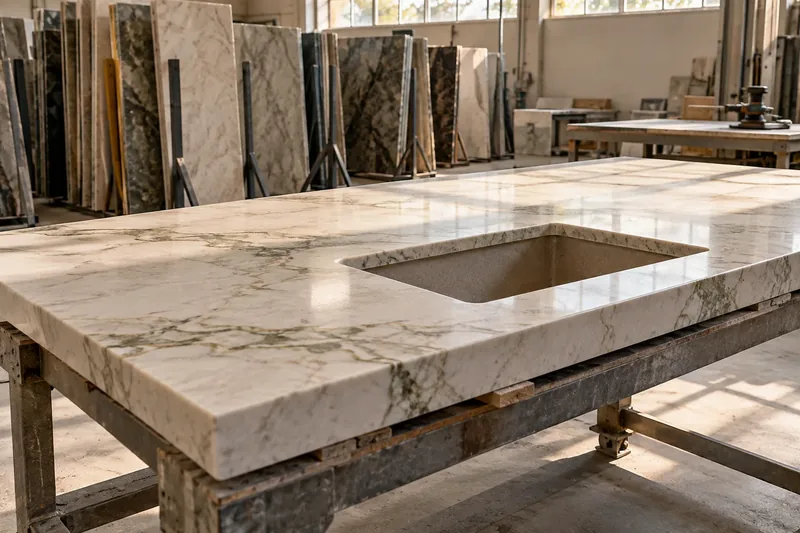
Cut in the shopEvery cut made wet in the shop, never in your home
CA License #585047Licensed, bonded and insured

Tops that suit a period house

In an older or historic Claremont home, a honed natural stone with a simple eased edge usually suits the house better than a glossy builder quartz with a heavy ogee. Claremont was incorporated in 1907, grew around Pomona College and the railroad, and still carries the character of that era along its tree-lined streets. The city has four historic districts, the first created in 1971, and the Russian Village District on Mills Avenue holds fifteen Depression-era houses built from local fieldstone and salvaged materials, listed on the National Register in 1978.

Honed or polished

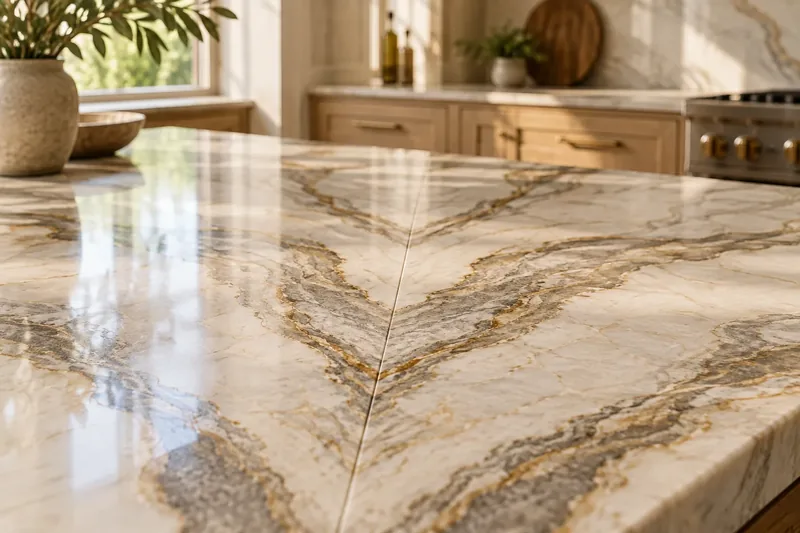
A honed finish is matte. It reads as older, softer and closer to the plaster, wood and tile of a period kitchen, and it hides light wear. A polished finish is glossier and shows the stone's colour at its deepest, but it can look new in a room that is not. Either finish works on granite; on marble the choice matters more, as the next section explains.

Edges that do not shout

An eased edge, a square edge with the corner just softened, fits Craftsman and Spanish revival kitchens. A pencil or small half-round edge suits cottages and bungalows. A thicker built-up edge can work in a larger house, but a decorative ogee usually looks borrowed from a newer home.

Marble, soapstone and granite in an older kitchen

Marble is a traditional choice for a period kitchen, and the one to go into with open eyes. It is a carbonate stone, mostly calcite, and acids such as lemon juice, wine and vinegar react with it and leave dull marks called etches. On a polished top those marks show as matte spots; on a honed top they blend into a finish that is already matte, which is one reason honed marble is the usual pick in a working kitchen. Marble is also soft enough to scratch and porous enough to stain, so it needs sealing and a pH-neutral cleaner.

Granite is harder and more forgiving, and a honed granite in a dark or muted colour gives much of the look of an old soapstone or slate counter with less upkeep. Soapstone itself suits a farmhouse sink and a Craftsman kitchen and needs regular care like any natural stone. If you want the look with no sealing at all, an engineered quartz in a matte finish is the fallback, chosen carefully so it does not read as a tract kitchen.

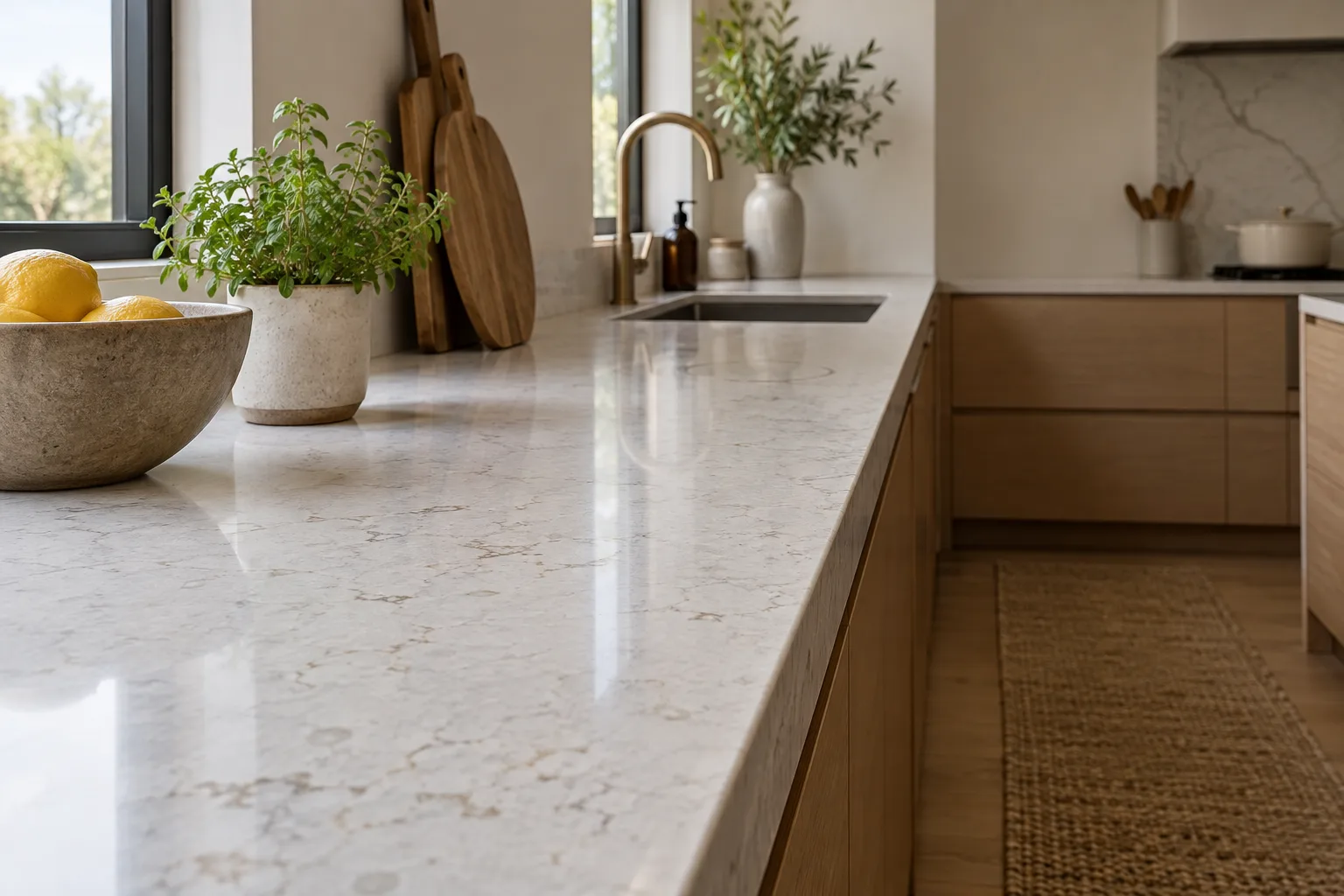
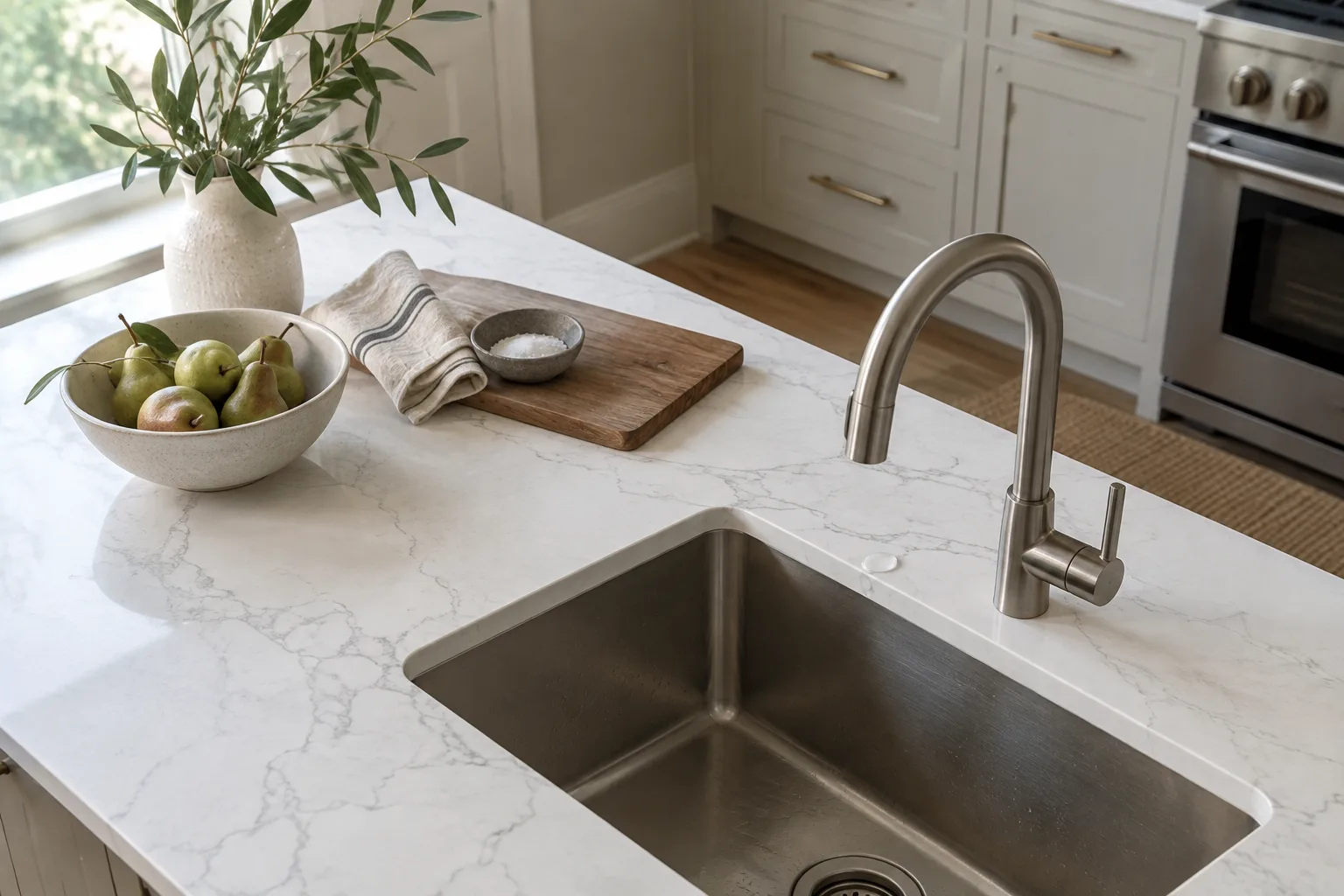
White quartz island photographed at three-quarters

Older kitchen layouts

Older Claremont kitchens were not sized for today's appliances, so the layout question usually comes before the countertop question. A kitchen from the first half of the last century may have a narrow range space, no dishwasher opening, a sink under a window that sits lower than a modern counter, or cabinets shallower than today's standard depth of about 25 to 26 inches. Counter height, now typically 35 to 36 inches, can be lower too.

We look at all of this at the template visit before a slab is chosen. Sometimes the answer is a new base cabinet under the old line of the room; sometimes it is keeping the original cabinets and fitting the top to them, including a shallower depth. What we will not do is template a kitchen that is about to change, because a top cut for the old layout is a top cut twice. If a remodeler or cabinetmaker is already on the job, we template after their boxes are set.

If your house is in one of the historic districts or on the city's register, ask the planning office before a remodel moves a window or an exterior wall. Claremont reviews projects that affect listed structures, and it is simpler to know before the cabinets are ordered.

Campus and village commercial work

Claremont's commercial countertop work comes from the Claremont Colleges and from the Village. The seven colleges, Pomona, Scripps, Claremont McKenna, Harvey Mudd, Pitzer, Claremont Graduate University and the Keck Graduate Institute, run dormitory kitchenettes, dining rooms, labs and faculty housing, and campus projects are procured through each college's facilities department, usually by bid from drawings. The Village, the walkable center of shops, galleries, offices and restaurants, was expanded in 2007 with a cinema, a boutique hotel, retail space and offices.

For a college facilities manager or a general contractor, the first step is to send the drawings and finish schedule; we return pricing by room or counter and shop drawings for approval. For a Village restaurant or shop, a bar top or service counter is templated on the installed casework and installed around opening hours.

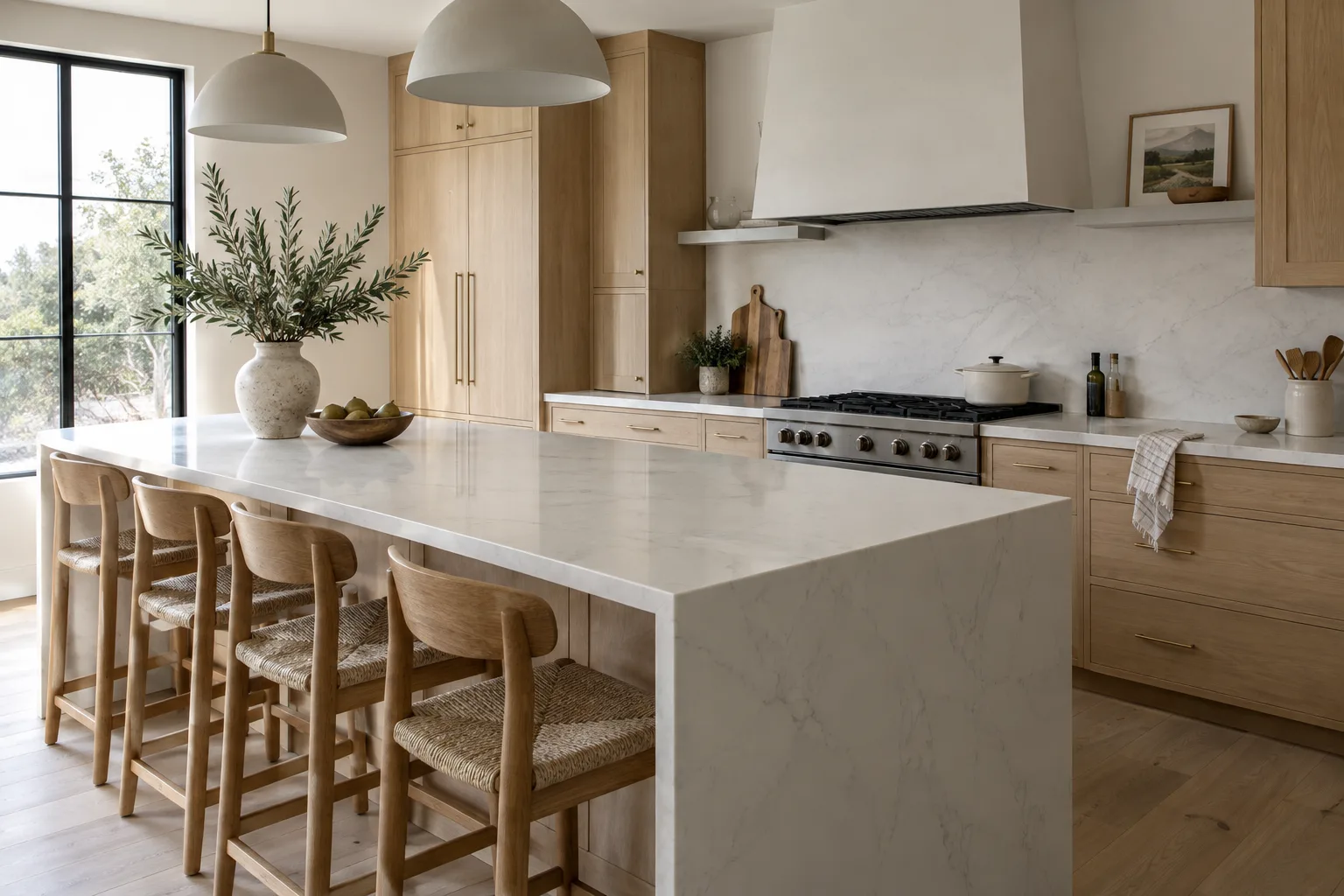
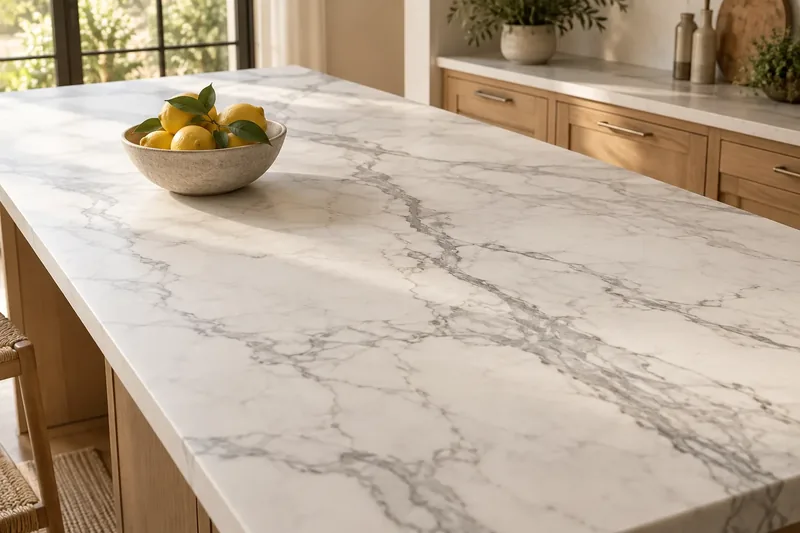
White marble island top with soft grey veining and a bowl of lemons

Countertop costs in Claremont

Countertop costs in Claremont depend most on the stone, the finish and how much the older kitchen needs before the top goes on. As a guide, a full kitchen replacement is typically estimated at roughly $2,500 to $6,000, and a period house with natural stone and cabinet work usually lands toward the upper end. Granite is generally estimated at about $40 to $100 per square foot installed; marble and soapstone are priced by the slab you choose.

What moves a Claremont quote

  • Material and finish. A honed finish is a shop process, and marble and soapstone slabs vary widely.
  • Square footage and slab count, which follow the shape of an older, often irregular room.
  • Cabinet work: levelling, a new base for a dishwasher, or a shallower top to fit original boxes.
  • Scribing to plaster walls that are not straight.
  • Edge profile, thickness and cutouts, including a farmhouse or apron-front sink.
  • Tear-off of an old tile top on a mortar bed.

These are estimates for Claremont, and they may change with the stone market and the condition of the house. Your final price is the one in the written quote we prepare after the template visit.

Crossing into Los Angeles County

Claremont is in Los Angeles County, one county line west of our base in San Bernardino County, and about a quarter of an hour's drive from it along Foothill Boulevard or the 210. It borders Upland, La Verne, Pomona and Montclair, and a Metrolink station on the San Bernardino Line sits by the Village. For you, the county line changes nothing about how the job is run: the template visit, the slab choice, the seam approval and the install day are the same as anywhere else we work.

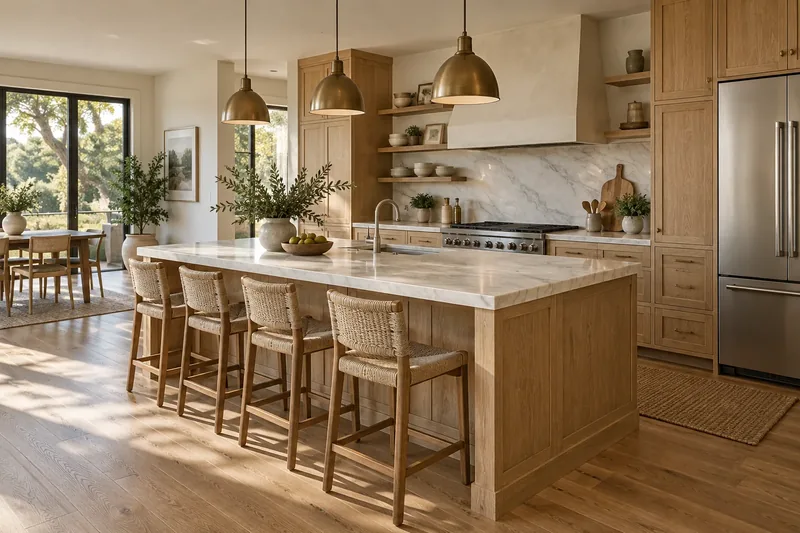
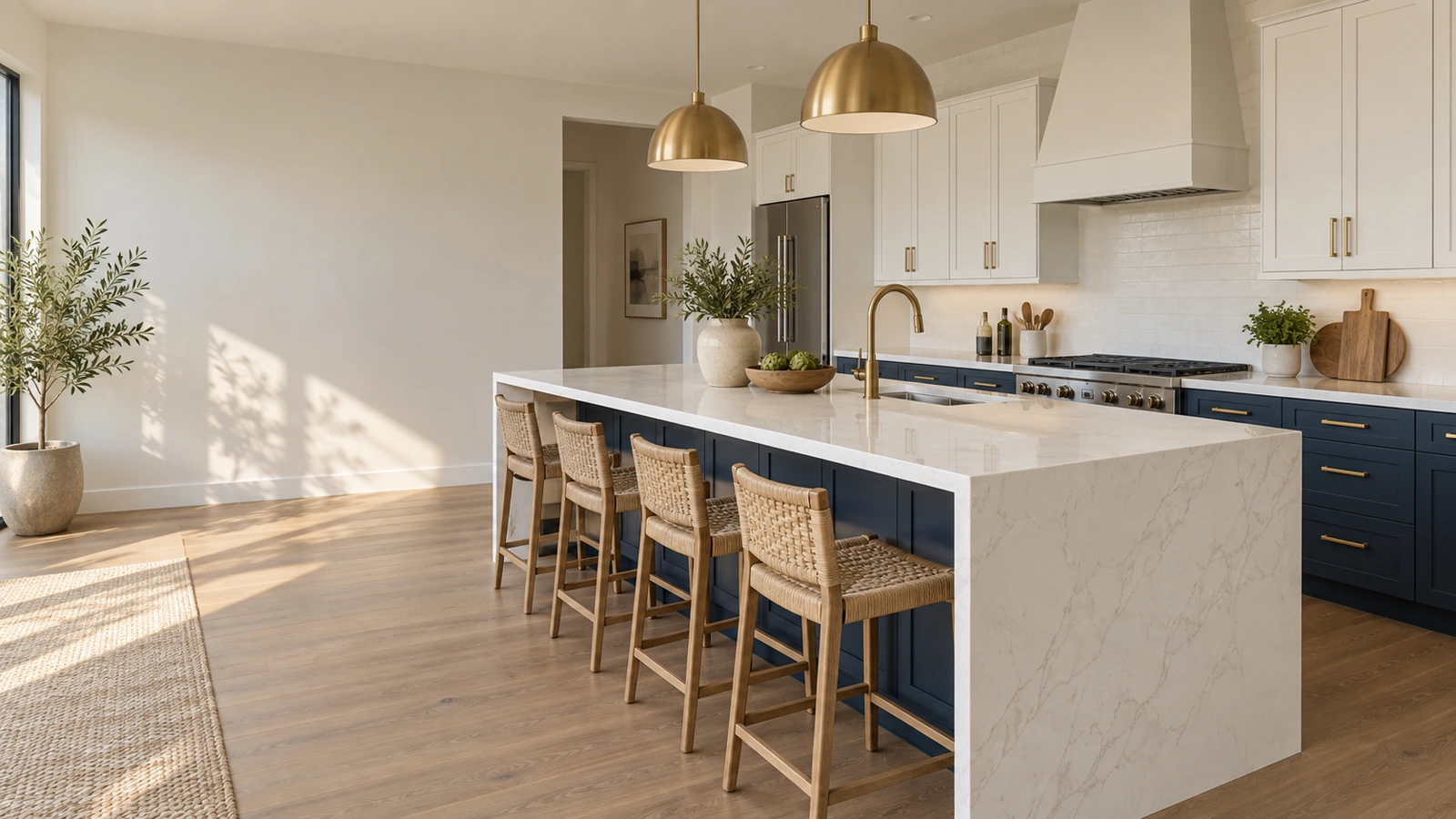
White oak kitchen with a large stone island, woven bar stools and brass dome pendants

Finishes and Edges We Fabricate

Questions

Claremont Countertop Questions

What do countertops cost for an older Claremont kitchen?

A Claremont kitchen replacement is typically estimated at roughly $2,500 to $6,000, with period houses that need cabinet work or natural stone landing toward the top of that range. Your written quote sets the final price.

Is honed marble a good idea in a kitchen?

It can be, if you accept that marble etches when acids touch it. A honed finish hides those marks far better than a polished one, and sealing plus a pH-neutral cleaner keeps stains down.

Which edge suits a Craftsman or Spanish revival kitchen?

Usually an eased or pencil edge. Simple profiles match the architecture, while a decorative ogee tends to look like it came from a newer house.

Can you fit a top to my original cabinets?

Often, yes. We check level, strength and depth at the template visit, and a top can be cut shallower than today's standard to suit original boxes.

My house is in a historic district. Does that affect the countertops?

Interior countertops are rarely the issue, but a remodel that moves a window or an exterior wall can be. Ask the city planning office before that part of the work is ordered.

Do you bid work for the Claremont Colleges?

Yes. A facilities manager or general contractor can send drawings and a finish schedule, and we return pricing and shop drawings for approval.

What happens at the template visit?

We look at the cabinets, walls, window heights and appliance spaces, talk through stone and finish, and agree seams and edge before any slab is cut.

Is there a warranty on the work?

Yes, a written warranty comes with each installation, and your quote spells out its terms.

Free template visit

Talk to us about countertops in Claremont

Homeowners get a free template visit. Contractors and builders can send plans for a bid.

Call (909) 922-1858

Licensed, bonded & insured · License #585047. Calls only, we do not receive text messages.

Call (909) 922-1858Licensed, bonded & insured · License #585047