California's Silica Rules and Why Cutting Stays in the Shop
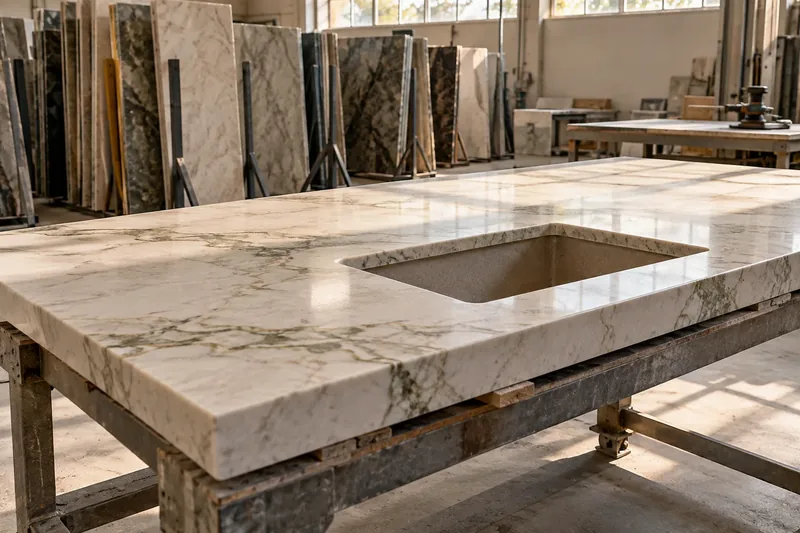
Quartz is cut wet in a fabrication shop, not in your home, because cutting engineered stone releases respirable crystalline silica and California regulates how that work is done. Engineered stone contains a higher share of silica than natural stone, and silicosis linked to engineered stone shows shorter latency and faster loss of lung function than cases from natural stone.
California has acted on this in several steps:
- Cal/OSHA's respirable crystalline silica standard, Title 8 section 5204, treats cutting, grinding, drilling and polishing of artificial stone with more than 0.1 percent crystalline silica as high-exposure trigger tasks.
- The standard requires wet methods: a continuous flow of water onto the surface where the blade or tool meets the stone, with recycled water filtered before reuse.
- Cal/OSHA adopted an emergency version in 2024 and made a strengthened standard permanent in February 2025.
- The California Department of Public Health classified silicosis as a reportable disease in June 2025.
What that means on your job
We template on your installed cabinets with your sink, cooktop and faucet specs in hand, so every opening is cut and polished in the shop with water on the blade. Install day is setting, leveling, seaming and mounting the sink. There is no dry saw running in your kitchen and no fine gray dust settling into your cabinets. If a remodeler or cabinet shop is buying tops from us, the same applies: pieces arrive finished and ready to set, which keeps your job site clean and your crew away from stone dust.
Outside California, Australia went further and banned engineered stone benchtops outright from July 1, 2024. California has not banned it. Quartz remains legal here when it is fabricated under these rules.