Skip to content
Call (909) 922-1858Licensed, bonded & insured · License #585047

Marble Countertop Installation in Rancho Cucamonga, CA

For marble countertop installation in Rancho Cucamonga, marble is the most beautiful stone we set, and the most honest about wear. Rancho Cucamonga Custom Countertops fabricates and installs marble for kitchens, baths and bars in Rancho Cucamonga, CA, with the slab chosen by you, the veining planned across every seam, and a finish picked for how you actually cook.

  • Free template visit
  • Seams approved before a cut
  • One written quote

Get a free template visit or a bid

What marble installation involves

Marble installation means choosing a full slab, templating your cabinets, cutting and finishing the stone in our shop, and setting it in one visit with the same crew. We talk through etching and patina before you commit, because marble rewards owners who know what it does. Homeowners, remodelers and cabinet shops can all book the template visit.

Marble is a soft, reactive stone, so the details decide how it ages: honed or polished surface, a sealer matched to the slab, support under long spans, and seams placed where the pattern can carry across. Serving Rancho Cucamonga, Upland, Fontana and Ontario, we set aside time for each of those choices before any stone is cut.

How we work

Marble Handled By One Crew

You get a straight answer on how marble wears, then a fabricator who has cut it before.

Real slab approvalYou approve the exact slab, so the veining you see is the veining you get
Honed or polishedFinish chosen with you, with etching explained before the cut
Sealed before installA penetrating sealer is applied in the shop, then the routine is shown to you
CA License #585047Licensed, bonded and insured

Why Marble Behaves Differently From Other Stone

Marble etches because it is made of calcium carbonate, and any acid dissolves a thin layer of that surface. Lemon juice, vinegar, wine, tomato sauce and many cleaners leave a dull ring where they sat. A sealer slows staining, but it does not stop etching, so we say this at the first visit and not after install.

It is also a softer rock than granite, with a Mohs hardness of roughly 3 to 4. A knife dragged across it will mark it, and a heavy pot set down hard can chip an edge. None of that makes marble a bad choice. It makes it a choice for people who value the look and accept a worn-in surface over years.

Three questions help most buyers decide:

  • Do you cook acidic food on this surface every day? If so, honed marble or a harder stone on the working runs may suit you better.
  • Will a soft patina bother you, or will it read as character? Owners who like old stone usually love marble. Owners who want a showroom finish in year five are happier with quartz.
  • Is the marble going on an island, a vanity or a baking counter? Low-traffic spots forgive marble the most.

Mixing marble with a harder stone

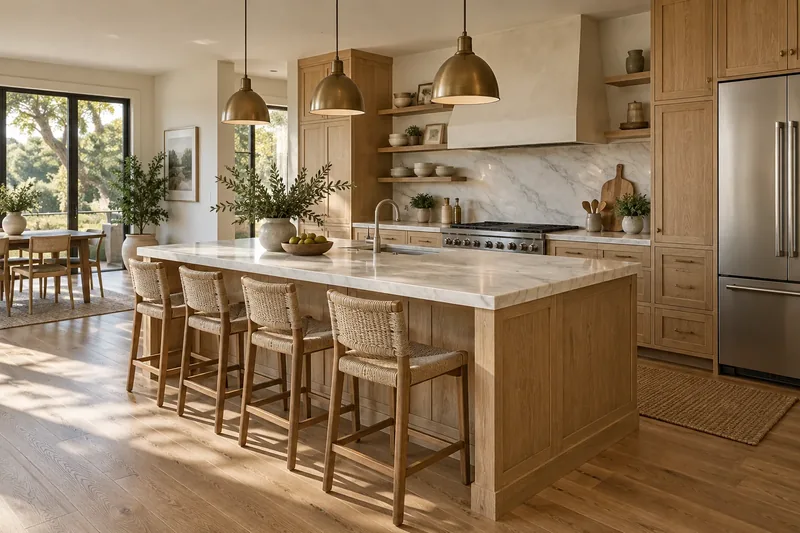
Many kitchens pair a marble island with granite or quartz on the perimeter, so the stove and sink runs take the abuse and the island carries the beauty. We lay both stones out together at the template visit so the colors sit well side by side.

Choosing the Slab and Laying Out the Veining

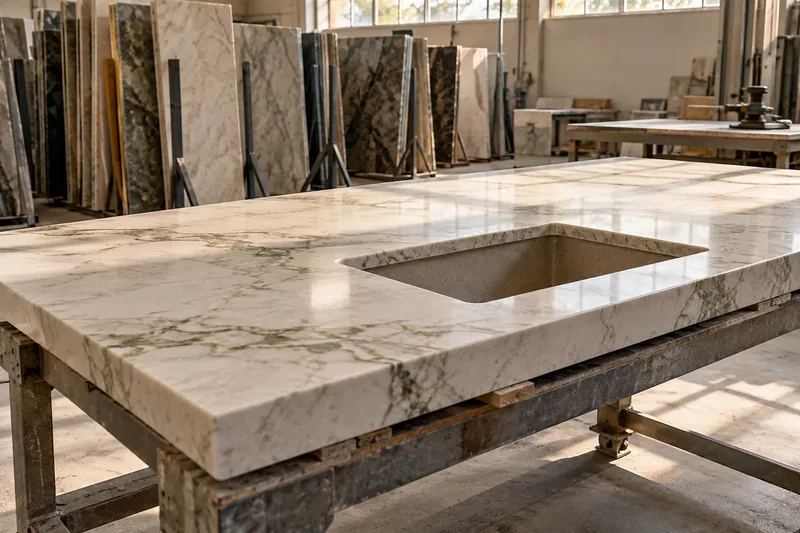
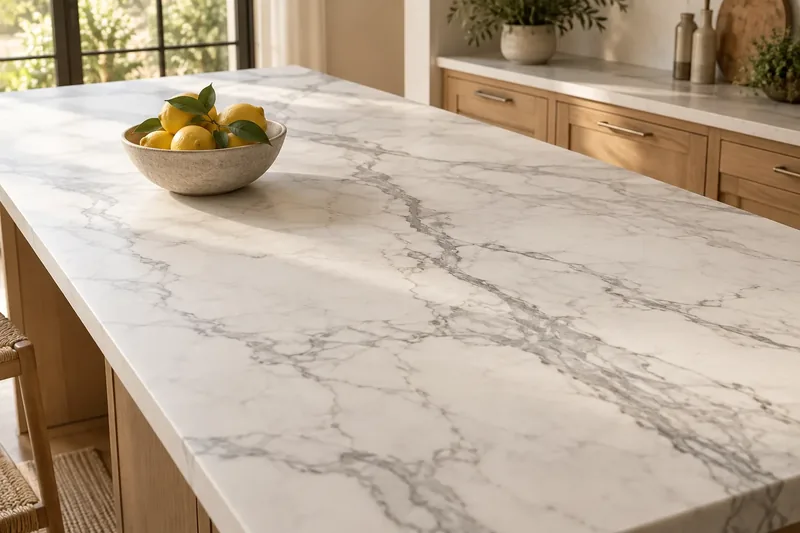
A marble slab is a one-off, so the layout is planned on the slab itself, not on a catalog picture. Carrara runs grey and soft, with feathery veins. Calacatta and Statuario are whiter with bolder, more dramatic veining, and they cost more for it. We go to the supplier with you, check each candidate under real light, and mark the run of the veins before anything is approved. For a dramatic island or a full-height backsplash, two slabs can be book-matched so the veining reflects itself across the joint, which takes extra slab and extra care.

What to check on the slab

Look for how the veining travels, whether darker clouds sit where you will see them, and any fissures or filled areas. A filled fissure is common in marble and is sound when set correctly, but you should choose whether it lands on a visible edge or is turned toward a wall.

Layout and book-matching

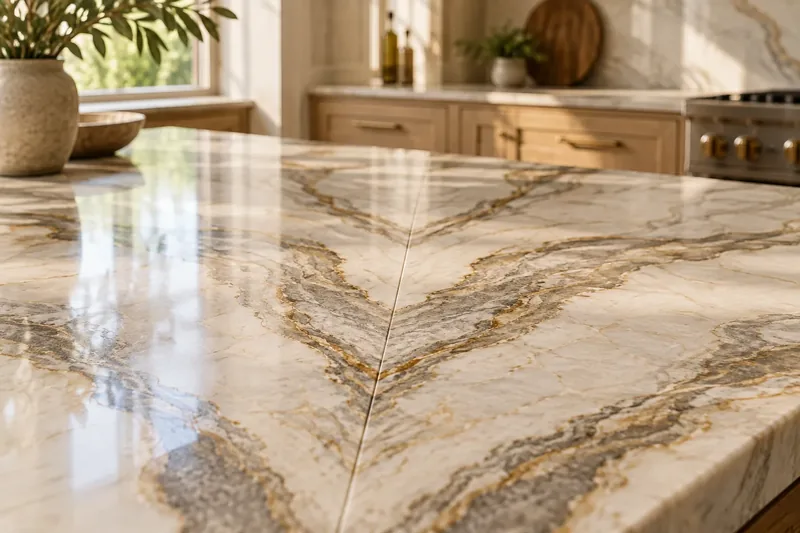
Your template pieces are placed over a photograph of the slab and shifted until the veins carry across each seam. Book-matched pieces are cut in order from the same slab, so the veins open outward from the joint like butterfly wings.

Honed or Polished: Picking the Finish

Honed marble is matte and polished marble is glossy, and that one choice changes how the stone ages. A polished surface looks brilliant on day one, but an etch mark shows up as a dull patch in a mirror finish. A honed surface starts soft and quiet, and etching blends into it much better. Most working kitchens we template lean honed for that reason, while powder rooms and formal vanities often stay polished.

Honed finish

A velvety matte that hides etching and fingerprints well, and shows water rings less than gloss. It can look slightly lighter and the veining a touch softer than the polished version of the same slab.

Polished finish

A deep reflective shine that brings out color and veining. It shows etching, scratches and water spots faster, so it suits lower-traffic surfaces, and it can be re-polished later when the surface dulls.

Estimated Marble Installation Costs in Rancho Cucamonga

Marble installation in Rancho Cucamonga is typically estimated at about $70 to $120 per square foot installed for Carrara-type stone, and about $110 to $250 per square foot for Calacatta and Statuario, with the slab itself driving most of the gap. These are estimates for planning only, and your written quote sets the final number after the slab and layout are settled.

  • The stone. Rarer, whiter marble with bold veining costs more per slab than a common grey Carrara.
  • Slab count. A kitchen is priced on the slabs the layout needs, not just the footage you see on top of the cabinets.
  • Book-matching. Mirrored pieces use extra stone and extra shop time, and are estimated higher than a plain run.
  • Edge and thickness. A mitered or built-up edge takes more labor than a simple eased edge.
  • Cutouts. Each sink, cooktop or faucet opening adds cutting and polishing.
  • Tear-out. Taking out and hauling away an old top is estimated at roughly $3 to $10 per square foot, depending on what it is made of.

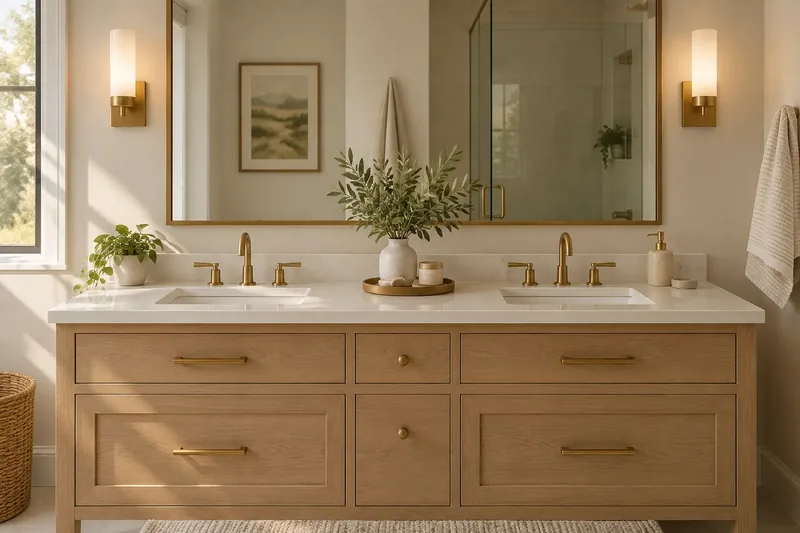
A small bathroom vanity top in marble is often much less than a kitchen, since it may come from a remnant or a single slab. We will tell you whether a remnant could work for your size before you pay for a full slab.

Sealing, Cleaning and Living With Marble

A sealed marble top should still be wiped promptly, because sealer buys you time and not immunity. We apply a penetrating sealer in the shop and show you the routine on install day. Oil, wine and coffee sit on the surface for a few minutes before they begin to soak in, so a quick wipe is usually enough to prevent a stain.

For daily cleaning, warm water and a few drops of pH-neutral stone soap do the job. Skip vinegar, citrus cleaners, bathroom tile sprays and anything labeled as a descaler, because those are acids and will etch the surface in one pass.

Chop on a board, set hot pans on a trivet, and put a coaster beneath any glass of wine or juice. If a spot does etch, light etching on a honed top often blends in with time. For deeper marks, our stone polishing and etch removal work can bring the surface back, and resealing every year or two keeps stain protection up.

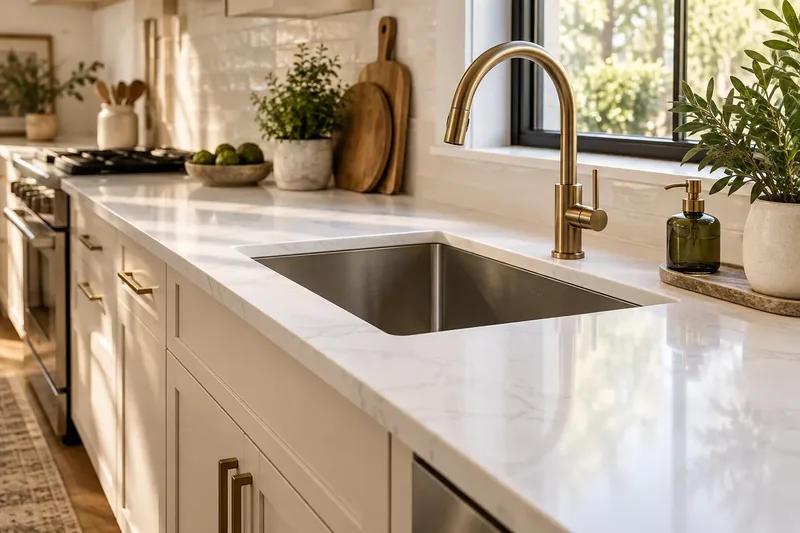
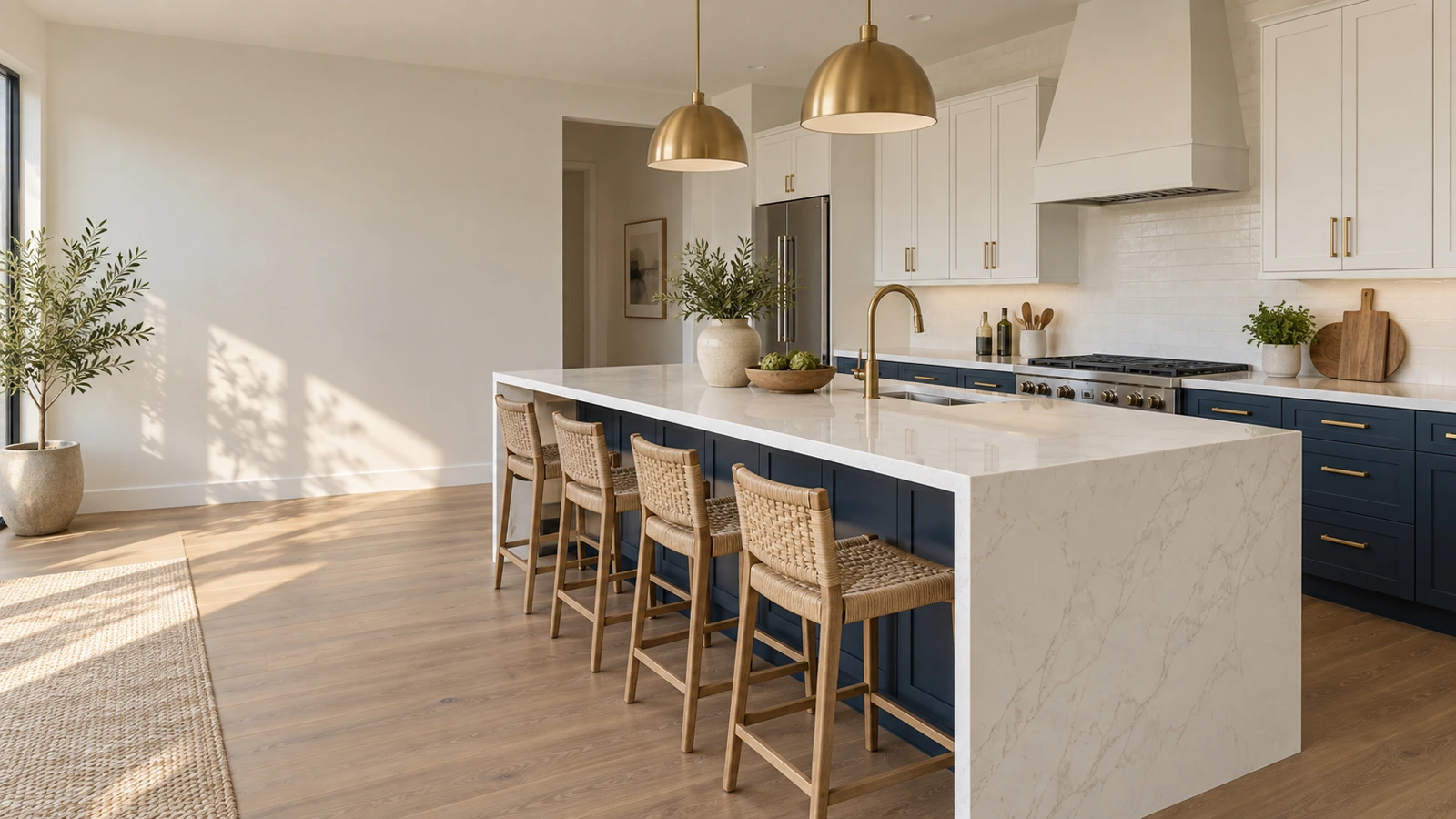
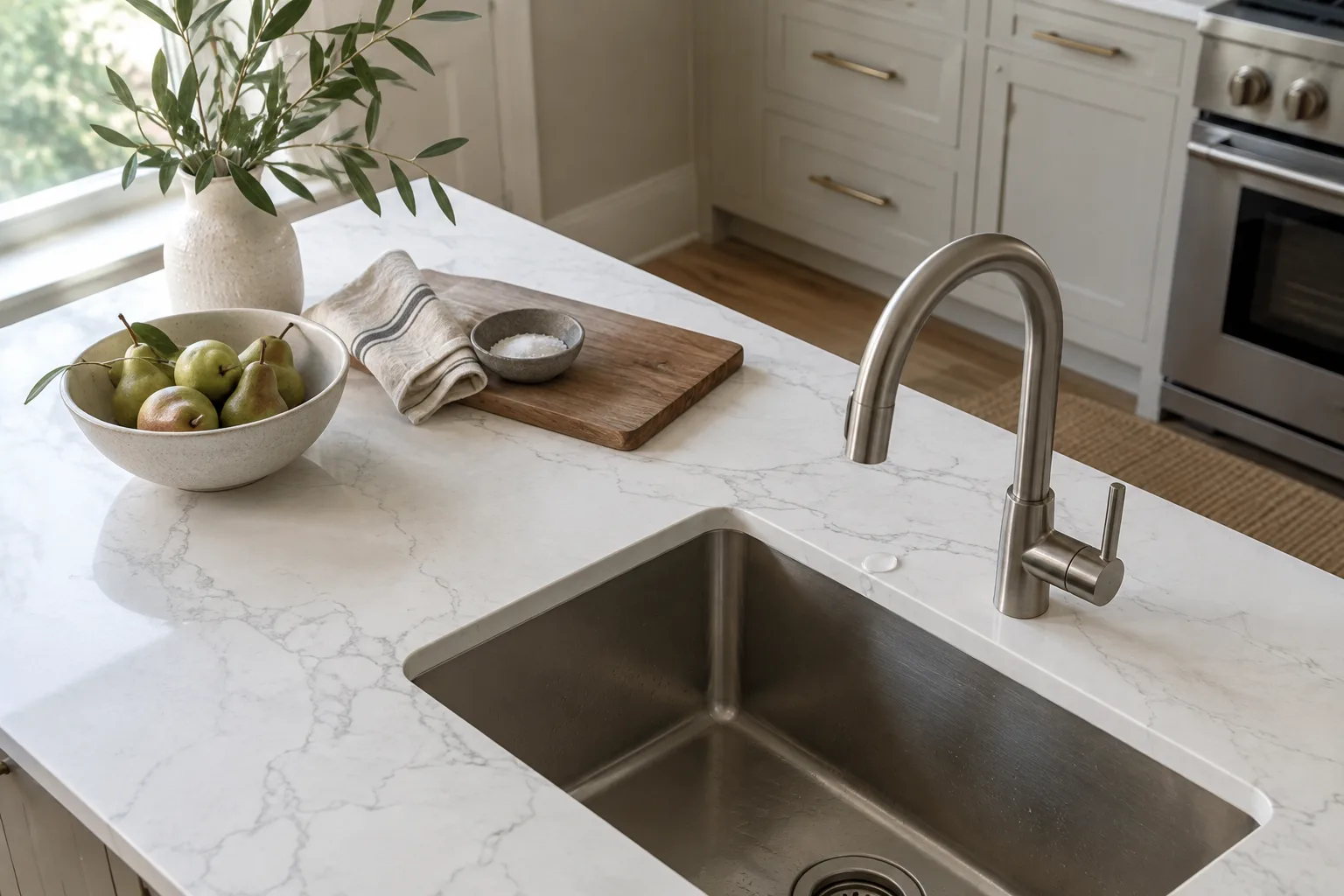
White quartz counter run with faint grey veining, a stainless undermount sink and a brass gooseneck faucet

From Template to Install Day for Marble

A marble job moves in a set order, and the pace depends on slab availability and how many pieces are cut. We confirm the install date in writing once the slab is chosen. Because marble is brittle, long narrow pieces such as a backsplash return or a thin slab section are handled and carried by more than one person.

  • Slab visit. You pick, approve and tag the slab.
  • Template. We measure your set cabinets with a digital tool. Have the sink and faucet on site.
  • Layout sign-off. You see seam and veining placement on a photo of your slab.
  • Shop work. Cutting, edge shaping, finishing and sealing happen in the shop.
  • Install. The crew sets the stone, bonds the seams, fits the sink and wipes the room clean.

Cabinets need to be level and solidly built, because marble that flexes can crack. We check this at the template visit and flag any shimming or added support before the stone arrives.

Quartzite counter with gold and grey veining book-matched so the pattern mirrors across the seam

Marble and Related Stone Work

The process

How a Marble Job Moves Forward

Four steps, and the stone is not cut until you have signed off on the slab, finish and seams.

  1. Call or send the form

    Homeowners book the free template visit. Trade customers email drawings and a finish list so we can bid.

  2. Pick the marble

    You choose the slab and the finish, and we mark the seams and veining on it for your approval.

  3. Template and shop work

    We template your cabinets, then cut, shape, finish and seal the marble in our shop.

  4. Set the stone

    The crew installs the tops, joins the seams, fits the sink and leaves the room tidy.

Questions

Marble Countertop Installation: Common Questions

How much does marble countertop installation cost in Rancho Cucamonga?

Most Carrara-type marble is estimated at about $70 to $120 per square foot installed, and Calacatta or Statuario at about $110 to $250. Those are estimates, and your written quote sets the final price once the slab and layout are chosen.

Will marble stain or etch in a busy kitchen?

It can do both, and etching is the more common problem. Acids dull the surface in a spot, while a sealer helps against stains. Honed marble hides etching better than polished, and a harder stone on the cooking runs reduces the risk further.

Should I choose honed or polished marble?

Honed suits most working kitchens because etching and scratches blend into a matte surface. Polished looks richer and suits low-traffic spots like a powder room, though it shows marks sooner and can be re-polished later.

Can I see the exact slab before it is cut?

Yes, and we insist on it. You visit the supplier, look at full slabs under real light, and approve one. That slab is tagged for your job and is the one we cut.

Does marble need sealing?

Yes. We apply a penetrating sealer in the shop before install, then show you how to care for it. Resealing every year or two is typical, and we can do it as a separate visit.

How long does a marble install take?

Install day itself is usually a single visit for a standard kitchen. The wait between template and install depends on slab availability and the number of pieces, and we confirm the date in writing.

Can marble go on a kitchen island with a seating overhang?

Yes, with support. A deeper overhang needs steel or brackets hidden under the stone because marble can crack if it is left to span unsupported. The needed supports are noted while we measure, so your cabinet installer knows what to build in.

Do you work with contractors and cabinet shops?

Yes. A remodeler can hand us cabinet drawings, bring the client along to approve the slab, and fit our template and install dates around the other trades on site.

Free template visit

Talk to us about marble countertop installation

Free template visit for homeowners. Remodelers and builders: send your drawings and we will quote the stone.

Call (909) 922-1858

Licensed, bonded & insured · License #585047. Calls only, we do not receive text messages.

Call (909) 922-1858Licensed, bonded & insured · License #585047