Picking the Actual Granite Slab, Not a Sample
For granite countertops in Rancho Cucamonga, the slab you approve is the slab we cut, because granite is a natural rock and no sample chip can promise what a full slab will show. Granite forms when silica-rich magma cools slowly underground, and it is made mostly of quartz, alkali feldspar, mica and plagioclase. The mix of those minerals changes from one part of a quarry to the next, which is why a color sold as one name can arrive warmer, darker or busier than the chip in a showroom binder.
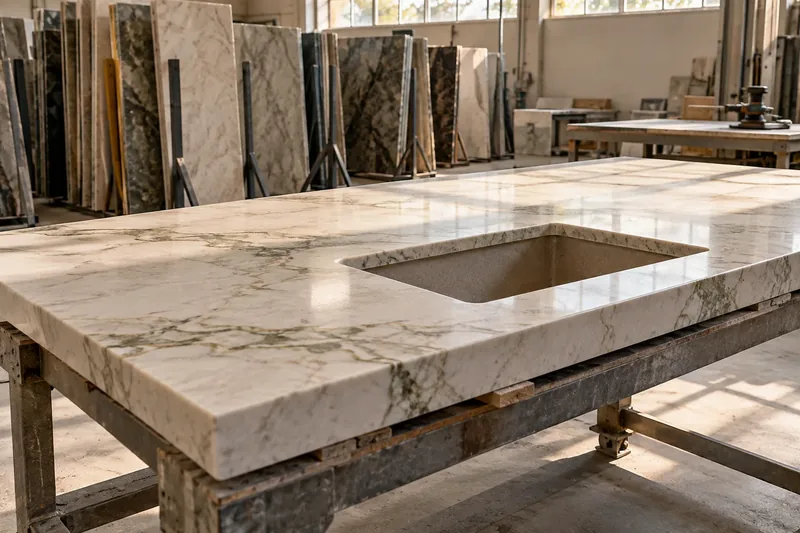
So the first real step on a granite job is a visit to the stone supplier with your kitchen measurements in hand. You look at the full slabs, not a photo. We help you check the things that change how a slab can be used:
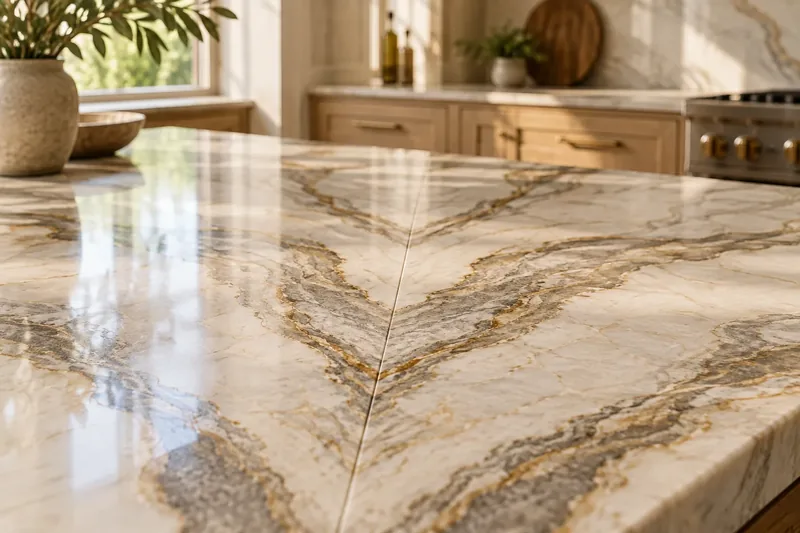
- Movement and direction. Veins, drifts and clusters of crystals run one way, and the layout has to respect that direction across every run.
- Slab size against your runs. A long wall or a large island may fit on one slab or may need two, and that decides where joints can go.
- Natural features. Fissures, resin-filled areas and mineral spots are part of the rock. We point them out so you decide whether they land on a visible run or in an offcut.
- Slab count. A kitchen that needs two or three slabs should come from one lot, so the color matches across the room.
Once you approve a slab, it is tagged for your job. Nothing gets swapped for a similar piece later.
Why a contractor should care about slab choice too
If you are a remodeler or a cabinet shop buying tops for a client, the same rule protects you. A client who picked the slab is a client who accepts the veining. We can meet your client at the supplier, record the approved slab, and fabricate to your cabinet drawings, so the choice is on record before your install date.