Skip to content
Call (909) 922-1858Licensed, bonded & insured · License #585047

Countertop Sealing in Rancho Cucamonga, Decided by a Water Test

Rancho Cucamonga Custom Countertops is San Bernardino County's leading specialist in countertop sealing in Rancho Cucamonga, CA, specializing in water-drop absorption testing, penetrating impregnator sealers and resealing of granite, marble and quartzite. We offer a test-first visit and a full clean, dry and seal for stone that fails it.

  • Free template visit
  • Seams approved before a cut
  • One written quote

Get a free template visit or a bid

Or call (909) 922-1858. Calls only, we do not receive text messages.

About our countertop sealing

Our team provides countertop care advice matched to the stone you actually have, delivering stain resistance that lasts for kitchens and bars and straight answers for both residential and commercial projects. The same crew that runs the absorption test applies the sealer, and every sealing job is backed by a written warranty.

From timing how fast a drop darkens a granite near the faucet to wiping the last excess sealer off a marble island before it can haze, our team handles every detail. Serving Rancho Cucamonga, Claremont, La Verne and San Dimas, we seal only the stone that needs it and leave the rest alone.

How we work

One Crew From Template to Install

Homeowners get a free template visit. Contractors, cabinet shops and builders get tops to their schedule.

Same crewThe crew that templates your cabinets is the crew that installs the tops
Seams approved firstSeam layout marked on your chosen slab and approved before anything is cut
Cut in the shopEvery cut made wet in the shop, never in your home
CA License #585047Licensed, bonded and insured

The water-drop test

The water-drop test shows whether a stone top in Rancho Cucamonga needs sealing: set a few drops of water on the most used areas, wait, and watch whether the stone darkens underneath. If the water stays beaded and the stone does not darken, the top is resisting absorption and sealing can wait. How fast the stone darkens tells you how urgent it is. Water that beads for ten minutes or more with no dark mark means the protection is holding. Water that flattens out without darkening in five to ten minutes means the protection is fading and a reseal belongs on the list for the coming weeks. Water that darkens the stone in one to five minutes means the top is absorbing freely, and an oil or wine spill will leave a mark.

Where to test

Test beside the sink and faucet, in front of the range, and on the island where people set down glasses. Those spots wear first, and a top can pass in a quiet corner while failing beside the sink. We test the same spots on every visit so the result can be compared over time.

Why the test beats a schedule

Two granites cut from different quarries can absorb at very different rates, and one kitchen gets far more water and oil than another. A fixed reseal date either wastes money on a top that was fine or leaves a thirsty stone exposed for months. The test replaces the guess with an observation you can repeat yourself.

Which stones need sealing, and which never do

Natural stones that absorb, such as many marbles, some lighter and more porous granites, and some quartzites, benefit from sealing; engineered quartz and solid surface never need it, so paying to seal them buys nothing. The resin that binds engineered quartz also closes its surface, which is why it does not stain the way natural stone can.

Granite varies more than most people expect. The Natural Stone Institute notes that most granite countertops do not need sealing at all, and many granite slabs are resin treated at the factory to fill micro-fissures before they ever reach a fabricator. Dense dark granites often shed water indefinitely. Paler, coarser granites are the ones most likely to fail the water test.

  • Usually worth sealing: most marbles, lighter porous granites, some quartzites, limestone.
  • Test first, often fine: dense dark granites and resin-treated slabs.
  • Never sealed: engineered quartz, solid surface, laminate.

If you are not sure what your top is, we identify it during the visit. A quartz top that was sold to a previous owner as stone is a common surprise, and the answer is simply that it needs cleaning, not sealing.

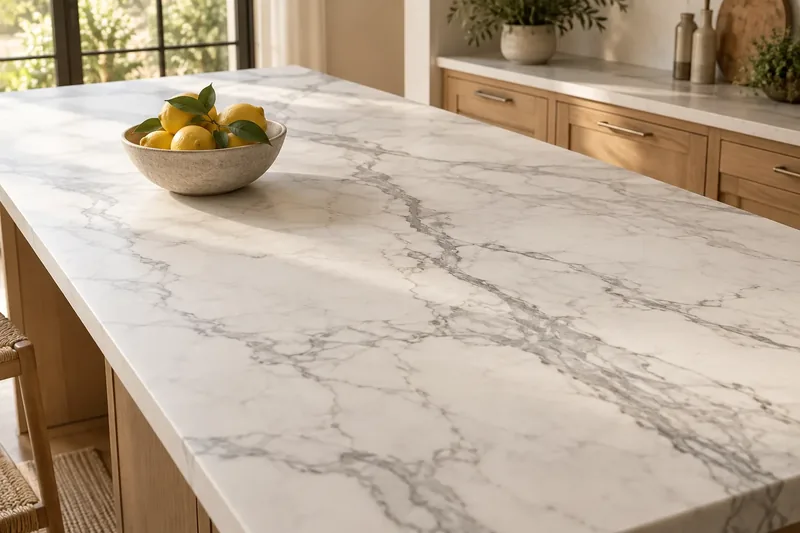
White marble island top with soft grey veining and a bowl of lemons

Sealer versus etching on marble

Sealer slows staining, but it does not stop etching on marble, because an etch is acid reacting with the calcite in the stone rather than something soaking into it. A sealed marble top can still show dull rings from lemon, wine or vinegar.

This matters when you decide what to pay for. If the complaint is dark spots that appear where water or oil sat, sealing is the fix. If the complaint is dull, rough patches that look lighter than the polish around them, the stone needs honing and polishing, which is a separate service on its own page. Many marble owners have both problems, and we tell you which marks are which before quoting.

Hard water rings are a third thing

The Cucamonga Valley Water District describes its water as moderately hard to hard, around 8 grains per gallon, so white mineral rings around faucets are common here. Those deposits sit on top of the stone and come off with the right cleaner. They are not absorption and they are not an etch, and sealing will not prevent them.

What countertop sealing typically costs

Countertop sealing in Rancho Cucamonga is typically estimated at roughly $150 to $400 per visit, with the square footage of stone, how porous it is and how much cleaning comes first moving the price the most. A small bath vanity sits at the low end; a large kitchen with an island and a full-height marble backsplash sits at the top.

Price drivers include the number of separate surfaces, whether old sealer residue or hard water film has to be stripped before the new sealer can penetrate, whether a porous stone needs a second coat, and whether stains already in the stone have to be drawn out first. A top that passes the water test in most areas may only need the sink and range zones done, which lowers the visit.

Treat these figures as estimates for our area that are subject to change. The final price comes from your written quote after we test the stone and measure what needs sealing.

How often to reseal

Reseal when the water test fails, not on a fixed date; for many stones in active kitchens that works out to every one to three years, and the Countertop article on Wikipedia notes that oleophobic impregnators can stretch that to every five to ten years. Test once a year and let the result decide.

A kitchen sink zone usually fails before the rest of the top, so partial reseals are common and sensible. Harsh or acidic cleaners strip sealer faster; a mild, pH-neutral soap keeps it working longer. If a stone that was sealed recently fails the test again within months, the sealer may have been wrong for the stone or applied over residue, and we check that before sealing again.

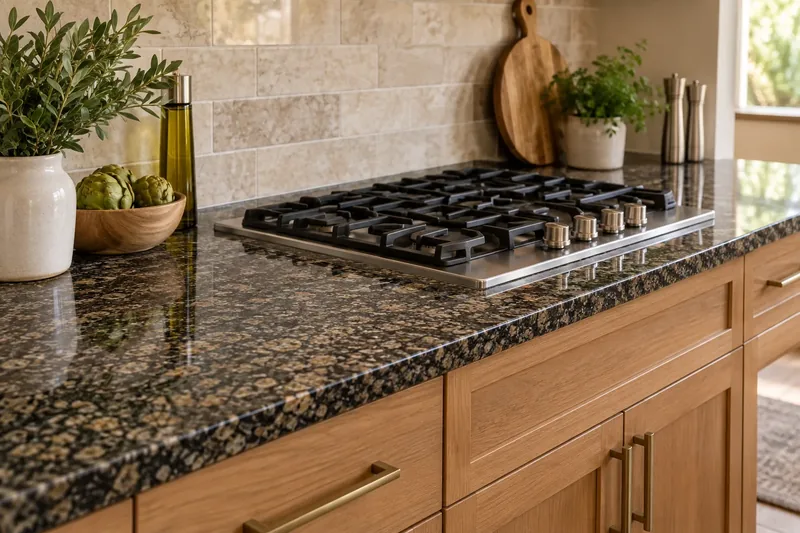
Dark speckled granite counter with a stainless gas cooktop set into it, above white oak cabinets

Sealing for rentals, restaurants and offices

Property managers, restaurant owners and office tenants in Rancho Cucamonga use scheduled testing to keep stone tops presentable without resealing every surface on every visit. A break room granite or a bar top in a busy room fails far sooner than a guest bath, so the test tells you where to spend.

For a building with several stone surfaces, we record which ones passed and which failed, so the next visit starts from a list rather than from scratch. That keeps sealing tied to measured absorption across the property.

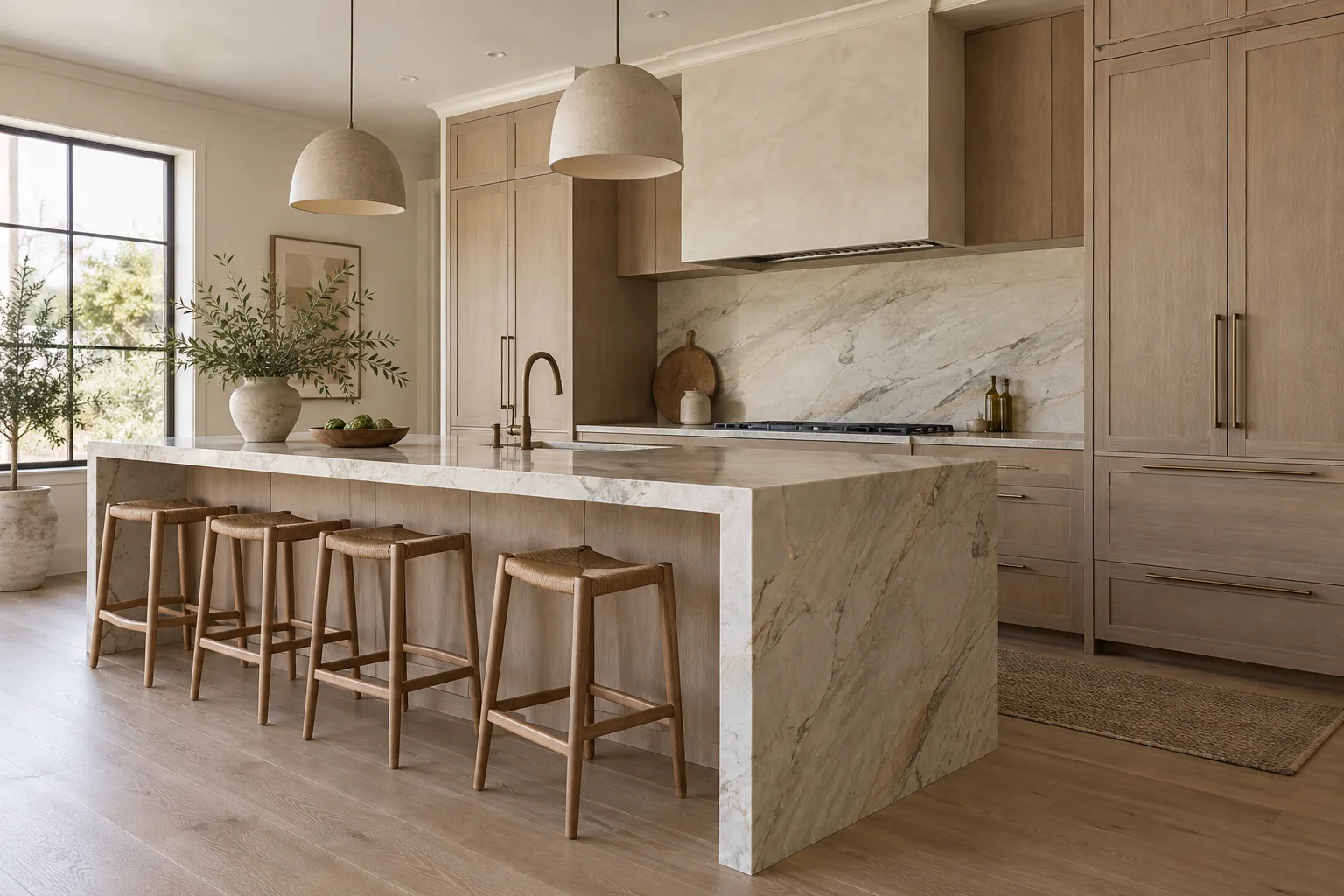
White oak kitchen with a heavily veined stone waterfall island, a matching full height backsplash and woven bar stools

Finishes and Edges We Fabricate

The process

From First Call to Finished Top

Four steps, and nothing is cut until you have approved the slab and the seam layout.

  1. Call or send the form

    Homeowners book a free template visit. Contractors and builders send plans and a finish schedule for a bid.

  2. Choose the slab

    You pick the material and the slab, and we mark where every seam will fall before it is approved.

  3. Template and fabrication

    We template on your installed cabinets, then cut, edge and polish the tops in the shop.

  4. Install

    The same crew sets the tops, fits the sink, joins the seams and leaves the room clean.

Questions

Countertop Sealing: Common Questions

How do I know if my granite countertop needs sealing?

Set a few drops of water beside the sink and wait. If the stone darkens within about five minutes it is absorbing and needs sealing; if the water stays beaded for ten minutes or more, it does not need sealing yet.

Does a quartz countertop need to be sealed?

No. Engineered quartz is bound with resin and does not absorb the way natural stone does, so it never needs sealing. Solid surface and laminate do not need it either.

How much does it cost to seal countertops in Rancho Cucamonga?

Sealing is typically estimated at roughly $150 to $400 per visit in Rancho Cucamonga, depending on the square footage and how porous the stone is. Your written quote sets the final price after the water test.

Will sealing stop my marble from getting dull spots?

No. Dull spots on marble are etches caused by acid, and sealer does not prevent them. Sealing protects against stains; etches are removed by honing and polishing.

How long does countertop sealing take, and when can I use the kitchen?

Most kitchens are cleaned, dried and sealed in one visit of a few hours. We tell you the cure window for the sealer used before you set anything wet on the stone.

Can you remove a stain that is already in the stone before sealing?

Often, yes. A stain that has soaked in is drawn out with a poultice before sealing, because sealing over it would lock it in place.

Do you seal countertops in cities near Rancho Cucamonga?

Yes. We test and seal stone tops in Rancho Cucamonga and nearby cities including Claremont, La Verne, San Dimas and Upland.

Why are there white rings around my faucet?

Those are usually mineral deposits from hard water, which the Cucamonga Valley Water District describes as moderately hard to hard here. They sit on the surface and clean off; they are not a sealing problem.

Free template visit

Talk to us about countertop sealing

Homeowners get a free template visit. Contractors and builders can send plans for a bid.

Call (909) 922-1858

Licensed, bonded & insured · License #585047. Calls only, we do not receive text messages.

Call (909) 922-1858Licensed, bonded & insured · License #585047